


Is My Child Ready for Orthodontic Treatment?
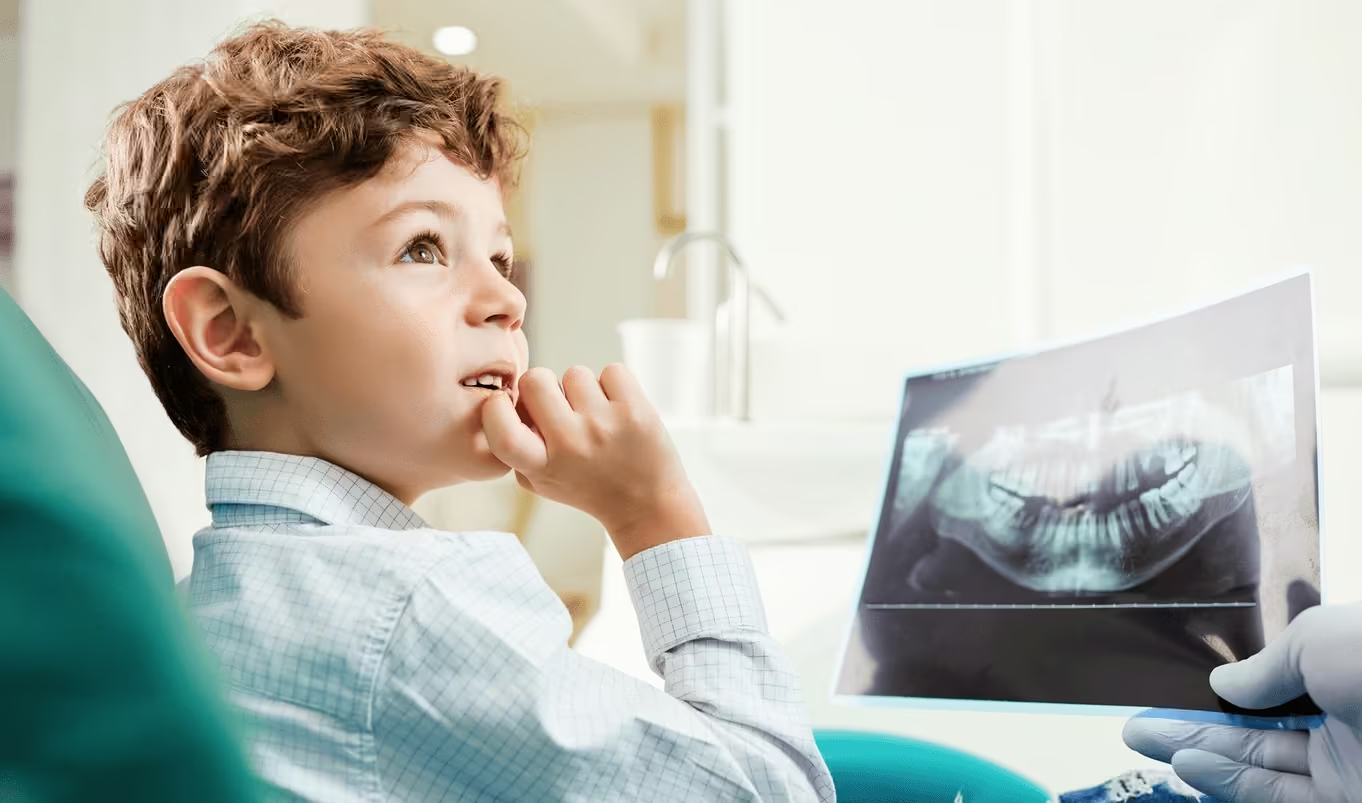
The American Association of Orthodontists (AAO) recommends that every child have their first orthodontic evaluation by age seven, even if their teeth appear straight. By that age, enough permanent teeth have usually erupted for an orthodontist to identify developing bite and jaw alignment concerns before they become more difficult to treat. While some children need early intervention, many simply benefit from regular monitoring as they grow.
As a parent, it isn't always easy to tell whether your child is developing a healthy bite or if something deserves a closer look. Choosing a family dental practice that also provides orthodontic care can make the process more convenient by keeping routine visits, evaluations, and treatment in one location. Keep reading to learn which signs to watch for, why age seven matters, what happens during an evaluation, and how in-house care from the best orthodontist in Redwood City can make treatment easier for your family.
What Are the Early Signs My Child May Need Orthodontic Treatment?
Some orthodontic problems in children stand out immediately, while others become noticeable only as permanent teeth begin to come in. Paying attention to these changes can help you decide whether it's time to schedule an orthodontic evaluation for your child.
Some of the most common signs your child may need orthodontic treatment include:
- Crowded, crooked, or overlapping permanent teeth
- Gaps that seem unusually large or teeth that don't have enough room to erupt
- Bite problems, including overbites, underbites, crossbites, or open bites
- Difficulty chewing or biting comfortably
- Frequent cheek biting or jaw discomfort
- Thumb sucking or prolonged pacifier use that continues beyond the toddler years
- Chronic mouth breathing, which can influence facial and jaw development
It's also worth paying attention if baby teeth fall out much earlier or later than expected. While every child develops at a different pace, unusual eruption patterns sometimes point to spacing or alignment concerns that deserve professional evaluation.
Many of these issues develop gradually. Even if your child isn't complaining about discomfort, an orthodontic evaluation can provide peace of mind and help determine whether everything is progressing as expected.
Why Is Age Seven an Important Milestone for Orthodontics?
Many parents assume they should wait until all of their child's permanent teeth have erupted before scheduling their first orthodontic evaluation. In reality, age seven gives children’s orthodontists an important opportunity to evaluate how the teeth, jaws, and bite are developing while a child is still growing.
By this age, children usually have a mix of baby teeth and permanent teeth. That combination allows the orthodontist to identify concerns that may not become obvious for several more years. If everything looks healthy, no treatment may be necessary. If a dental problem is developing, the orthodontist can recommend monitoring or discuss whether early orthodontic treatment would be beneficial.
An evaluation at age seven doesn't mean your child will leave with braces. For many families, the appointment simply establishes a baseline and guides future growth.
What Happens During an Early Orthodontic Evaluation?
A child's first orthodontic screening is typically a straightforward and comfortable appointment. During the visit, the orthodontist will:
- Review your child's dental and medical history
- Examine how the teeth, bite, and jaws are developing
- Take digital X-rays or images if needed
- Explain whether your child needs treatment now, continued monitoring, or no orthodontic treatment at this time
Will My Child Need Braces Right Away?
A common question parents have after their child’s first orthodontic exam is, “Does my child need braces now?” In many cases, the answer is no. The orthodontist’s recommendation will depend on your child’s age, jaw growth, bite, and how their permanent teeth are coming in.
After the evaluation, your orthodontist may recommend one of the following:
The goal is always to recommend treatment only when it offers the greatest benefit. In many cases, waiting allows your child's smile to develop naturally while still keeping a close eye on future changes.
How Does In-House Orthodontic Care Make Things Easier for Families?
Coordinating appointments between multiple offices can become challenging, especially for busy families. When your child's dental care and orthodontic care happen in the same practice, the experience often becomes much more convenient.
Some of the advantages include:
- Routine dental visits and orthodontic appointments in one familiar location
- Better communication between dental and orthodontic teams
- More coordinated treatment planning throughout every stage of your child's smile development
- Easier scheduling that can reduce trips to multiple offices
- A familiar team that can continue caring for your child's oral health as they grow
Best Orthodontist in Redwood City for Your Child's Smile
Children’s smiles can change quickly as permanent teeth come in, and the first signs of an orthodontic problem are not always easy to spot. When children’s orthodontic care is available in the same office as routine dental visits, parents can get answers sooner and manage every stage of care in one familiar place.
At Redwood City Dentistry, families can receive routine dental care and orthodontic treatment in the same office. Orthodontic care is led by Dr. Zachary Hollander, who earned his DDS from Columbia University before completing his orthodontic training and a master’s degree in Oral Biology at UCLA. By working alongside Dr. Tara Firouzi and Dr. Shahrdad Kazerani, Dr. Hollander can provide coordinated care without requiring families to manage treatment between separate dental and orthodontic practices.


Redwood City Dentistry Location
Comprehensive Family Dentistry, Periodontics, Orthodontics, Cosmetic Dentistry & Restorative Dentistry

Redwood City , CA, 94061
.svg)
.svg)


